
Guides · Sleep
Sleep well out there
A good night’s sleep is what makes the next day go well. Here’s the gear that kept me warm on a 26° night, all in a 28-liter pack, and the habits that matter just as much as the gear.
No affiliate links. I don’t get a commission on anything here.
Before any of the gear
Start with yourself.
Everybody sleeps differently. Some people run warm, some can’t get warm. Some need a thick pad, some sleep on anything.
So the setup below is mine. The real skill is paying attention to what your own body responds to, and building your system around that.
Part 1
The gear.
The quilt
Katabatic Gear Flex 25° quilt.
I love this quilt. I’ve used it on several nights in the mid-20s, and on plenty of much warmer ones.
When it’s cold, the bottom half zips into a toe box and the quilt attaches to my pad.
The pad
NEMO Tensor, regular wide.
It gave me 5–6 good years. Then the valve failed, and now it stays inflated for about an hour.
I’ll probably switch to a Therm-a-Rest. Pads wear out. If yours is getting old, check it before a cold trip, not during one.
The pillow
Sea to Summit inflatable pillow. Small, light, and it packs down to almost nothing.
The tent
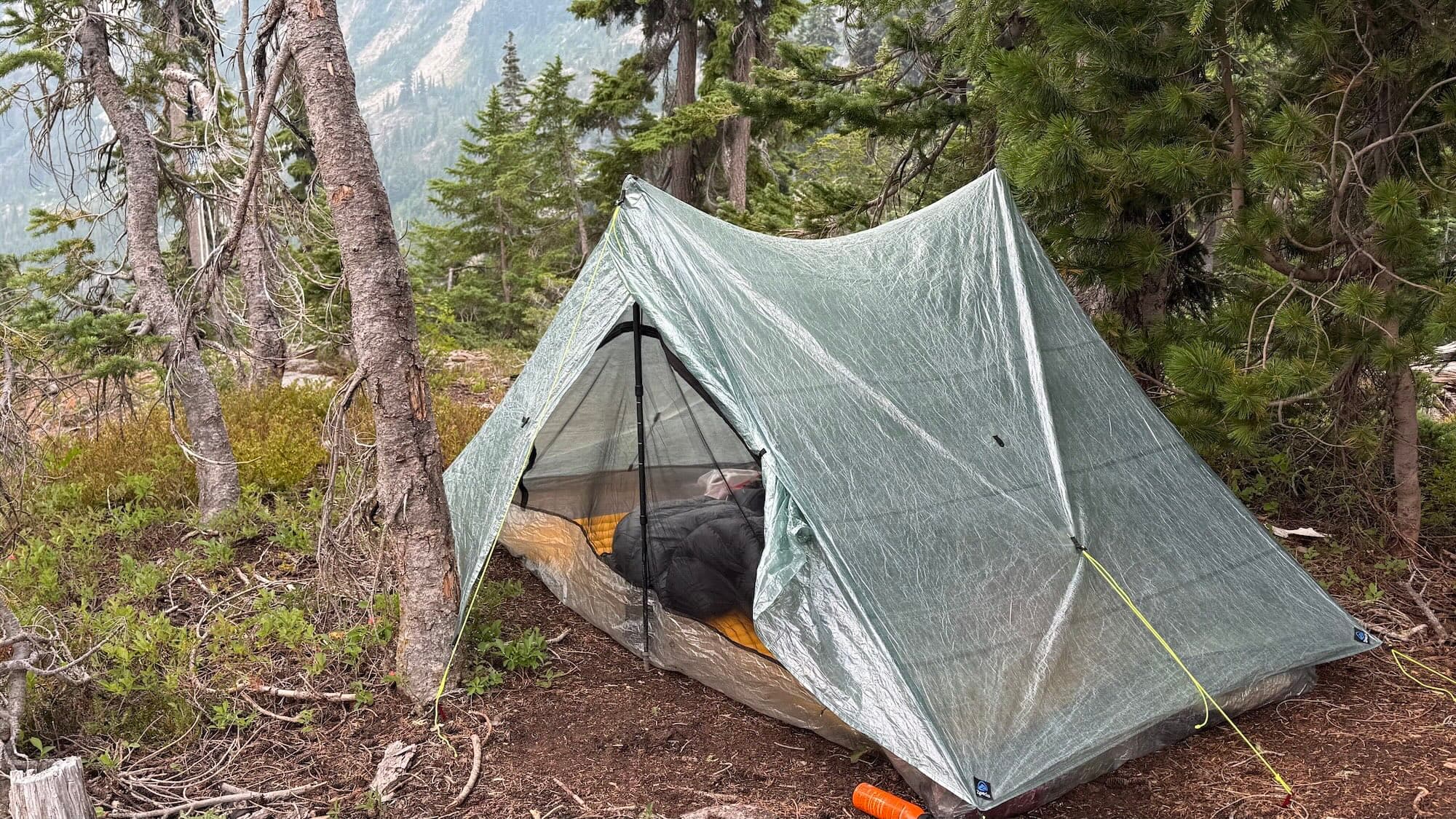
Zpacks Duplex.
It pitches with trekking poles. In a 28-liter pack, that’s not optional: a tent with its own poles won’t fit.
What I sleep in
- Smartwool socks I only wear to bed. A dry pair, just for sleeping.
- Smartwool leggings. Two pairs when it’s cold.
- Patagonia Micro Puff with hood.
- A Smartwool merino beanie. It’s thin, so it fits under the Micro Puff hood. It’s also great when I’m moving.
- Gloves when it’s cold.
My hiking socks and camp socks (both Darn Tough) are separate pairs, so the sleep socks stay dry.
Cold, early nights
On the Eagle Cap trip, the sun went down around 7:30 and it was cold. I spent most evenings bundled up in my tent.
That’s why I left my camp chair at home. On warm July trips with long evenings, I bring it. On a cold fall trip, the weight is better spent on warm layers.
See everything else I carried: Everything in my 28-liter pack.
Part 2
The habits.
Some of the biggest differences in how I sleep have nothing to do with gear.
Get clean, even when it’s cold
Staying warm at night is mostly about regulating your temperature. That’s much harder when you’re coated in sweat, sunscreen, and bug spray.
So I wash in whatever’s there, a lake or a river, even when it’s cold. I never just plunge in. I work in slowly, focused on my breathing, calming my body the whole way.
I’ve washed in lakes with snow and ice still melting into them. One trip, the water was so cold that stepping back out onto the snow actually felt warm.
I carry a small towel to dry off. It packs into my mug.
A serious caution: cold water can kill
The involuntary cold-shock gasp reflex has drowned people. This is not something to take lightly.
- Never jump in. Work your way in slowly, and keep your breathing calm.
- Only in still water you can easily climb out of.
- Plan your way out before you get in. Is the rock slippery? Slipping and breaking a leg at 8 p.m., 15 miles from the trailhead, with a storm on the horizon, is a real emergency.
- Hypothermia is real. I know someone whose body has a very hard time rewarming after any time in the cold.
- Build up over time. I take cold baths at home to acclimate.
- Never make your first cold bath in the mountains. Far from help is the worst place to find out how your body reacts. Start by practicing at home, where you’re safe.
Above all, know your own body.
Soak your legs
I push myself hard, and my legs usually ache by evening. Unless the water is brutally cold, I do a therapeutic soak of my feet and legs. It’s huge for me. I sleep far better after.
Eat for sleep
I love spicy food, but I don’t eat it in the backcountry. My system is already doing something different out there, and spicy food upsets it. So I eat blander.
Then I finish with something calming. For 20 years, that was tea, and it works well. This summer I started finishing with bone broth instead, and it works really well too. It’s incredibly rejuvenating after a long day.
My full food list is in Everything in my 28-liter pack. Yours will look different.
Make it yours
Build your own routine.
None of this is one-size-fits-all. Try one change at a time, notice what your body responds to, and keep what works.
A good night’s sleep isn’t a luxury out there. It’s what makes the next day’s decisions good ones.
Plan it
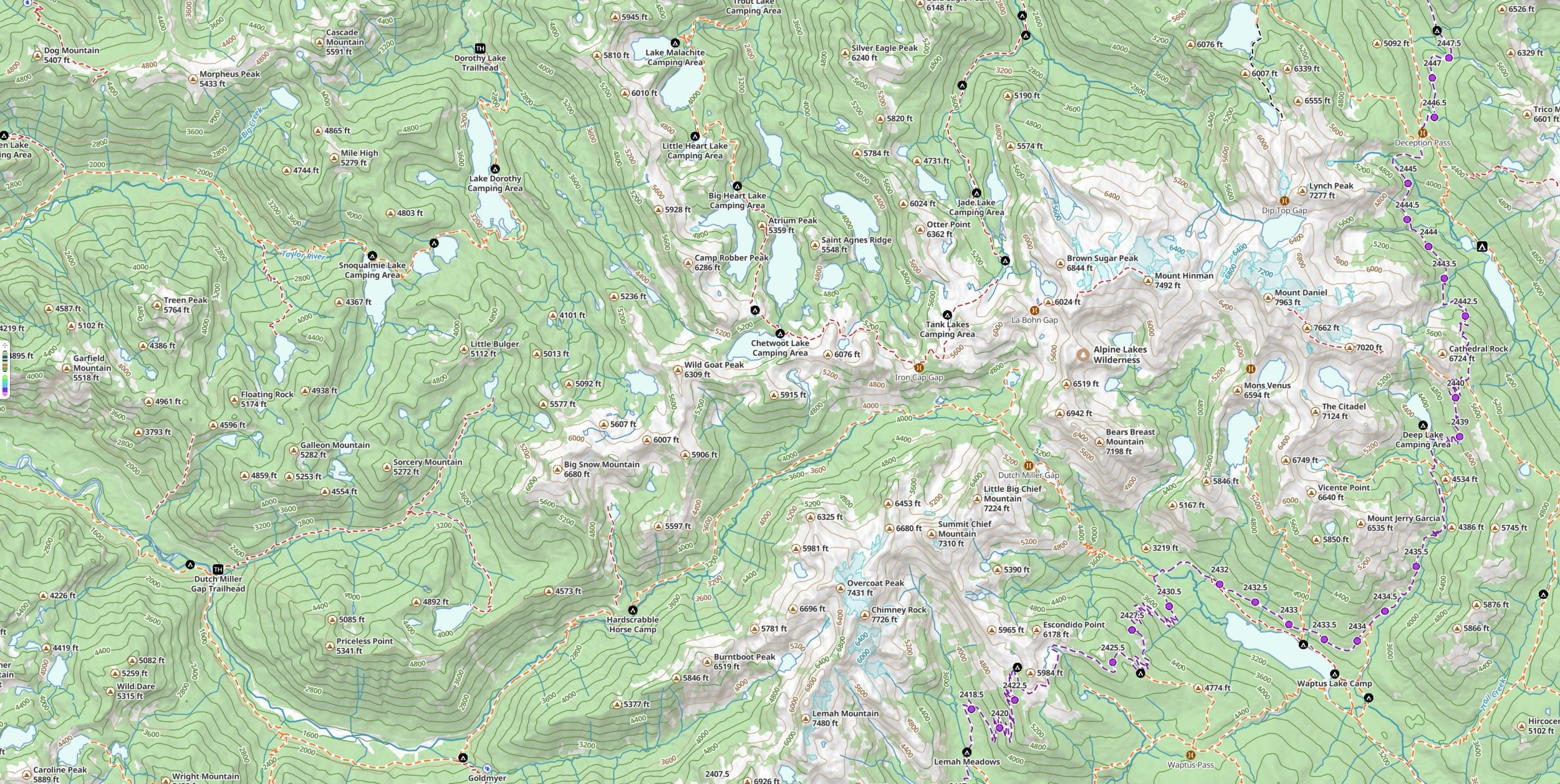
Know where you’ll sleep before you go.
Pick your camps, find the water nearby, and check the elevation so you know how cold the night will get.