
Guides · Gear
Everything in my 28-liter pack
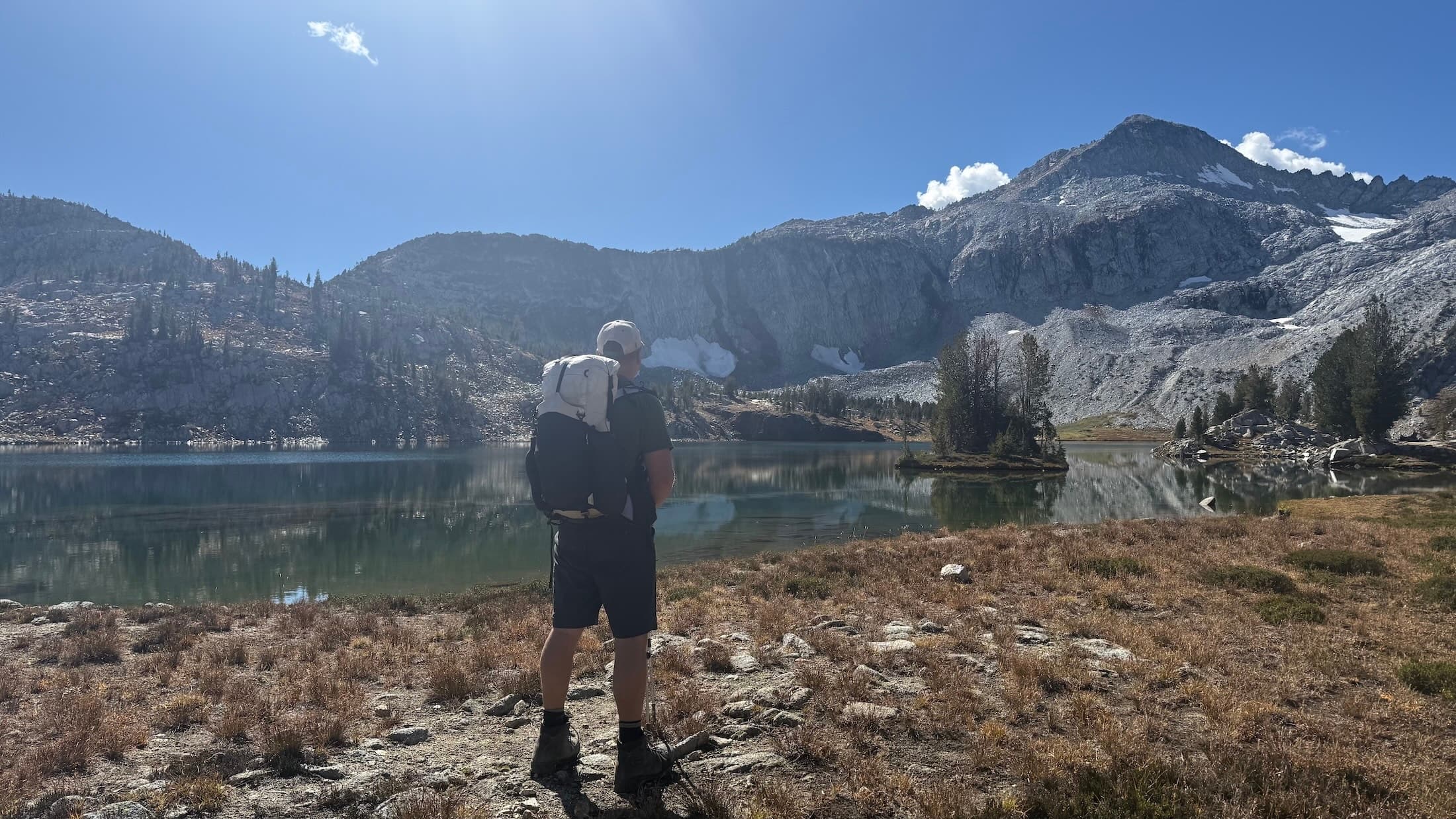
My friends call it my baby pack. This fall it carried everything for 5 days in the Eagle Cap, including enough warm clothes for a 26° night. Here’s the full list, and what made it fit.
No affiliate links. I don’t get a commission on anything here. This is just what I carry.
The pack
Why a running pack.
Last fall, a friend talked me into running the Ancient Lakes 25k. I got a running vest with soft flasks on the shoulders, and I loved having my water right there. No hose, no bladder to dig out and refill.
So I wanted a backpacking pack that worked the same way. That same friend had the UltrAspire Altruist, which they use for fastpacking and long runs.
Technically it’s a running pack. That’s part of what makes it so good: it carries the weight up high, off your glutes, which is great for hiking.
I research most of my gear on CleverHiker. They have great recommendations. The Altruist isn’t on their lists, probably because it’s so small. For me, it’s been a hidden find.
The numbers
Two trips, one small pack.
| Trip | Days | Starting weight | Notes |
|---|---|---|---|
| Eagle Cap Wilderness (Sep) | 5 | 29 lb | Extra warm layers for a 26° night. No chair. |
| Alpine Lakes Wilderness (Jul) | 4 | 27 lb | Camp chair. No extra warm layers. |
Both starting weights include 2.5 liters of water.
On the Eagle Cap trip we walked out after 4 days (here’s why), and I still had a little over a day’s food left. So the kit held 5 days.
The list
Pack and water.
Pack
- UltrAspire Altruist. 28 liters total: about 23 L in the main compartment, plus pockets on the front, waist, and back. UltrAspire rates the side and rear pockets at about 1 L each, but I’m pretty sure I got more than that into them.
- The main compartment is waterproof. Food in the outer pockets goes in zip-locks. We had rain in the middle of the Eagle Cap trip, and everything stayed dry.
Water
- Two 800 ml soft flasks, one on each shoulder. Clean water, always in reach.
- One 1 L soft flask with a HydraPak filter cap, in a side pouch. This carries dirty water, and it’s easy to top off at every stream I pass.
Carrying less and refilling often is a big part of how the weight stays down. It only works if you’ve planned where the water is. (See how much water do you actually need?)
The list
Shelter and sleep.
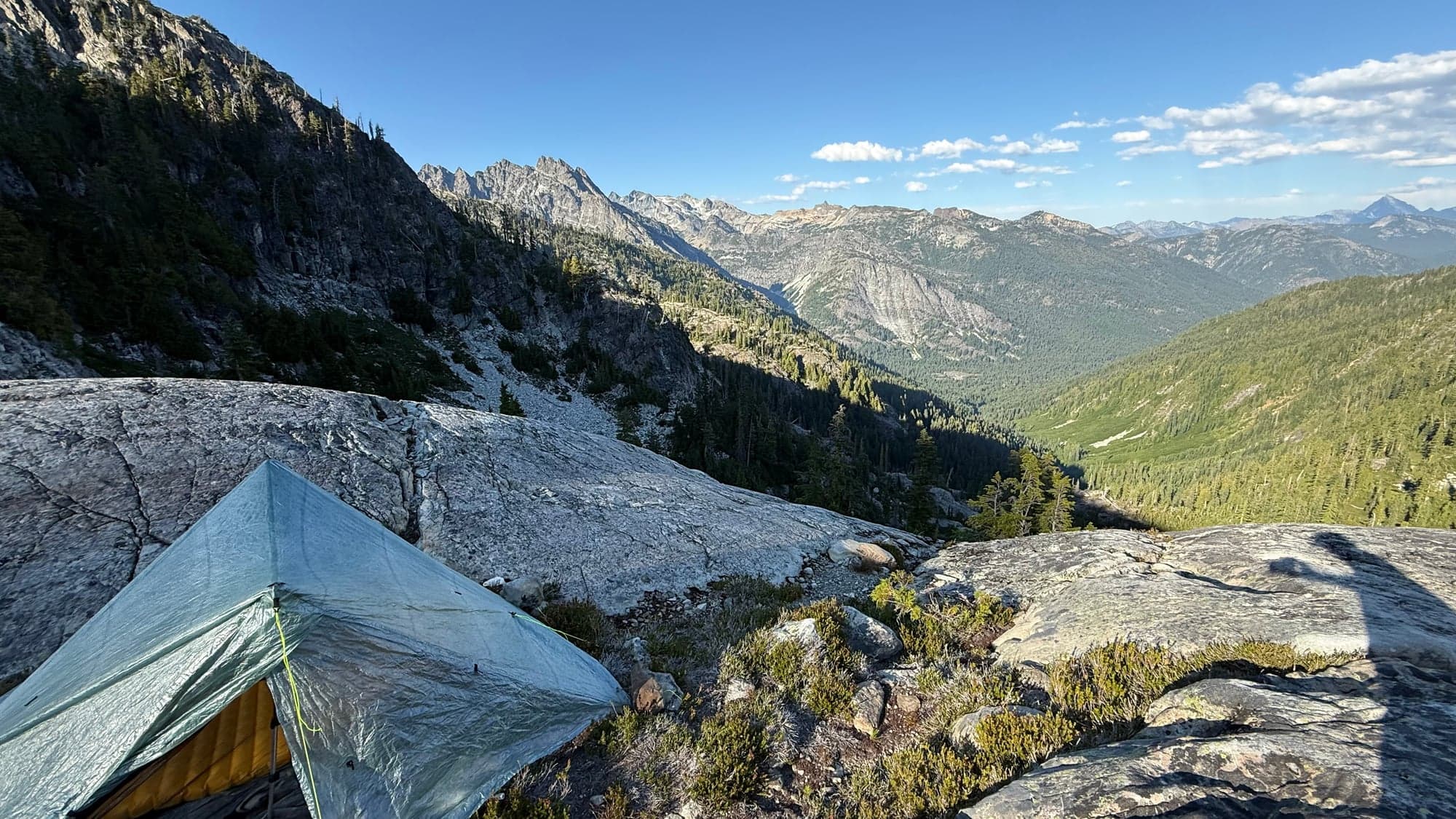
- Zpacks Duplex tent. It pitches with trekking poles. This matters more than anything else on the list: a tent with its own poles won’t fit in a 28 L pack.
- NEMO Tensor pad (regular wide). After 5–6 years, the valve failed, and now it won’t stay inflated for more than about an hour. I’ll probably switch to a Therm-a-Rest.
- Katabatic Gear Flex 25° quilt. I love this quilt. I’ve used it on several nights in the mid-20s, and on much warmer ones. When it’s cold, the bottom zips into a toe box and the quilt attaches to the pad.
- Sea to Summit inflatable pillow.
More on staying warm and sleeping well: the backcountry sleep guide.
The list
Kitchen and food.
Kitchen
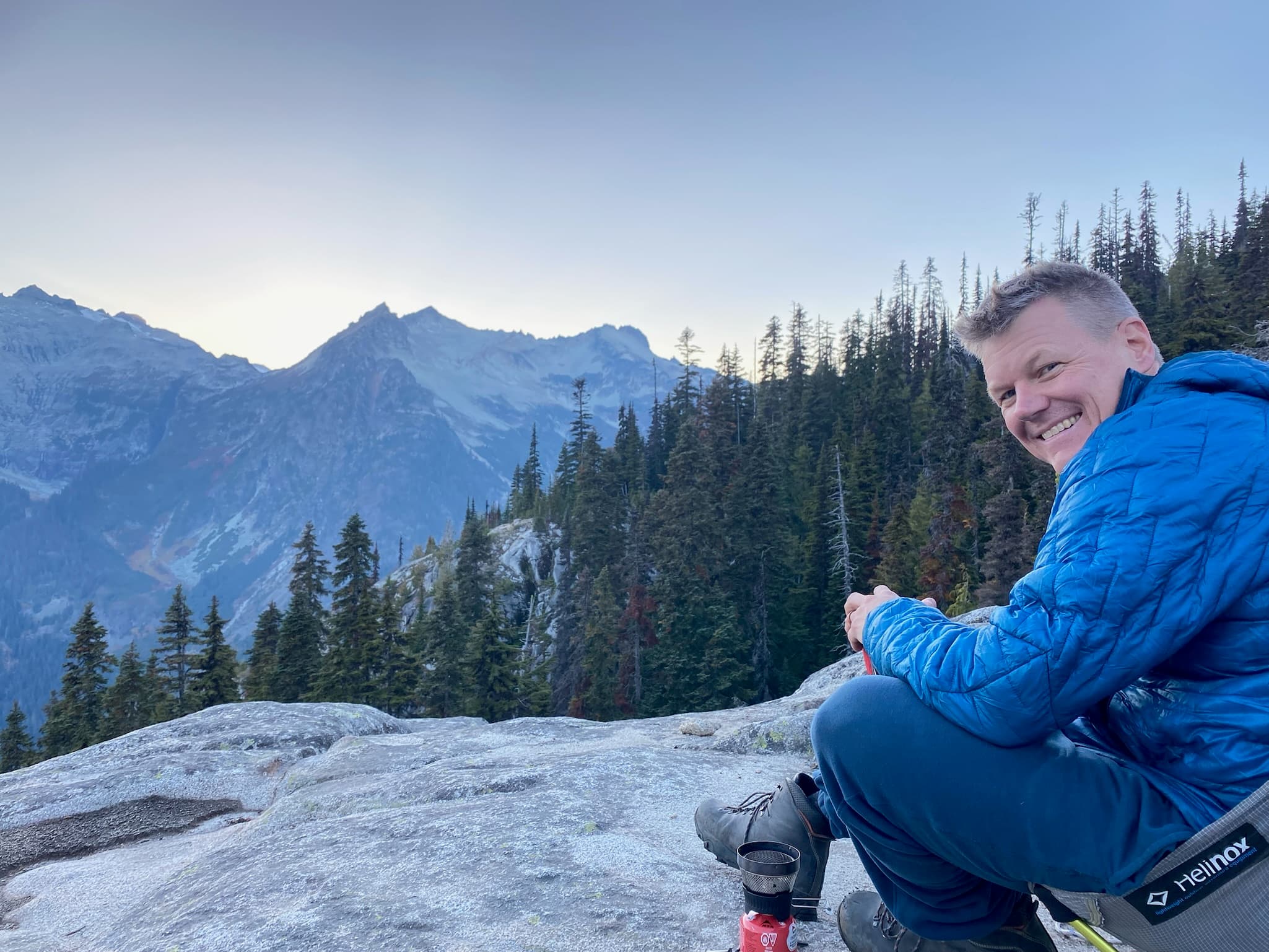
- MSR WindBurner stove. It has a bowl at the bottom, and I pack the fuel inside the stove.
- Spork
- Mug
Food
Getting food right is a big part of making everything fit. Most of us bring too much. It takes a few trips to learn how much you actually eat.
Your list won’t look like mine. What works for my body almost certainly won’t work for yours. Use this as a starting point, not a plan to copy.
Dinner: Packit Gourmet meals. I take them out of their packaging, put them in zip-locks, and cook them in the WindBurner’s bowl. Then I put dinner in a tortilla. Noodles, rice, pretty much anything.
Per night: 1 tortilla, and bone broth. The broth is incredibly rejuvenating after a long day.
Breakfast: instant oatmeal and instant coffee.
Snacks, per day:
- 1 Probar
- 1 RXBAR
- About ⅓ lb of trail mix
- 1–2 jerky sticks
- A handful of licorice or gumdrops
How it’s packed:
- Breakfasts and dinners: one gallon zip-lock, in one side pouch.
- The day’s snacks: hip pouch and shoulder pouches.
- The rest of the snacks: one gallon zip-lock, in the other side pouch.
- Tortillas: one gallon zip-lock, in the back pouch.
The list
Clothing.
What I wear while hiking
- Smartwool tee
- Kühl zip-off pants
- Darn Tough socks
- Hat
Layers and camp clothes
- Patagonia Micro Puff with hood
- REI rain jacket
- Smartwool leggings (2 pairs when it’s cold)
- A second pair of Darn Tough socks, for camp
- Smartwool socks, only for sleeping
- Smartwool merino beanie. It’s thin, so it fits under the Micro Puff hood, and it’s great when I’m moving. (When it’s cold.)
- Gloves, when it’s cold
The list
Everything else.
- BoglerCo ultralight trowel. The best trowel I’ve used for digging a cat hole, and it’s small and light.
- Toilet paper
- Ursack bear-resistant bag. When I’m alpine, I’m more worried about rodents getting into my food. It ties to a tree and works great.
- Rope to hang food
- Bear spray
- Printed map and compass. My phone is my main map, but paper never runs out of battery. (See printing your maps.)
- Battery pack
- Headlamp
- Whistle
- Small towel, to dry off after washing in a lake or river. It packs into my mug.
- My full first aid kit. It was really hard to fit, but I brought all of it: bandages, gauze, Steri-Strips, People’s Paste wound powder, sunscreen, scissors, a first aid manual, hydrogen peroxide, Advil, Tylenol, Benadryl, spare batteries, spare shoelaces, ripstop repair tape, and more.
In July, I slipped in a creek getting water after dinner and punctured my foot. I cleaned the wound, put People’s Paste on it, and covered it with a bandage. It healed really well, and I hiked on it for 3 more days. That’s why the full kit comes with me, even when it barely fits.
My experience, not medical advice.
Optional: the chair
- Helinox backpacking chair. It straps onto the bottom of the pack.
I brought it to the Alpine Lakes Wilderness in July, when we had long, warm evenings. I left it home for the Eagle Cap. The sun went down around 7:30, it was cold, and I spent most evenings bundled up in my tent.
Next time
What I’d change.
- The pad. After 5–6 good years, the valve failed. I’ll probably switch to a Therm-a-Rest.
- First aid kit. I brought my full kit, and it was the hardest thing to fit. I’d rather squeeze it in than leave it home, but I’m looking at how to pack it smaller.
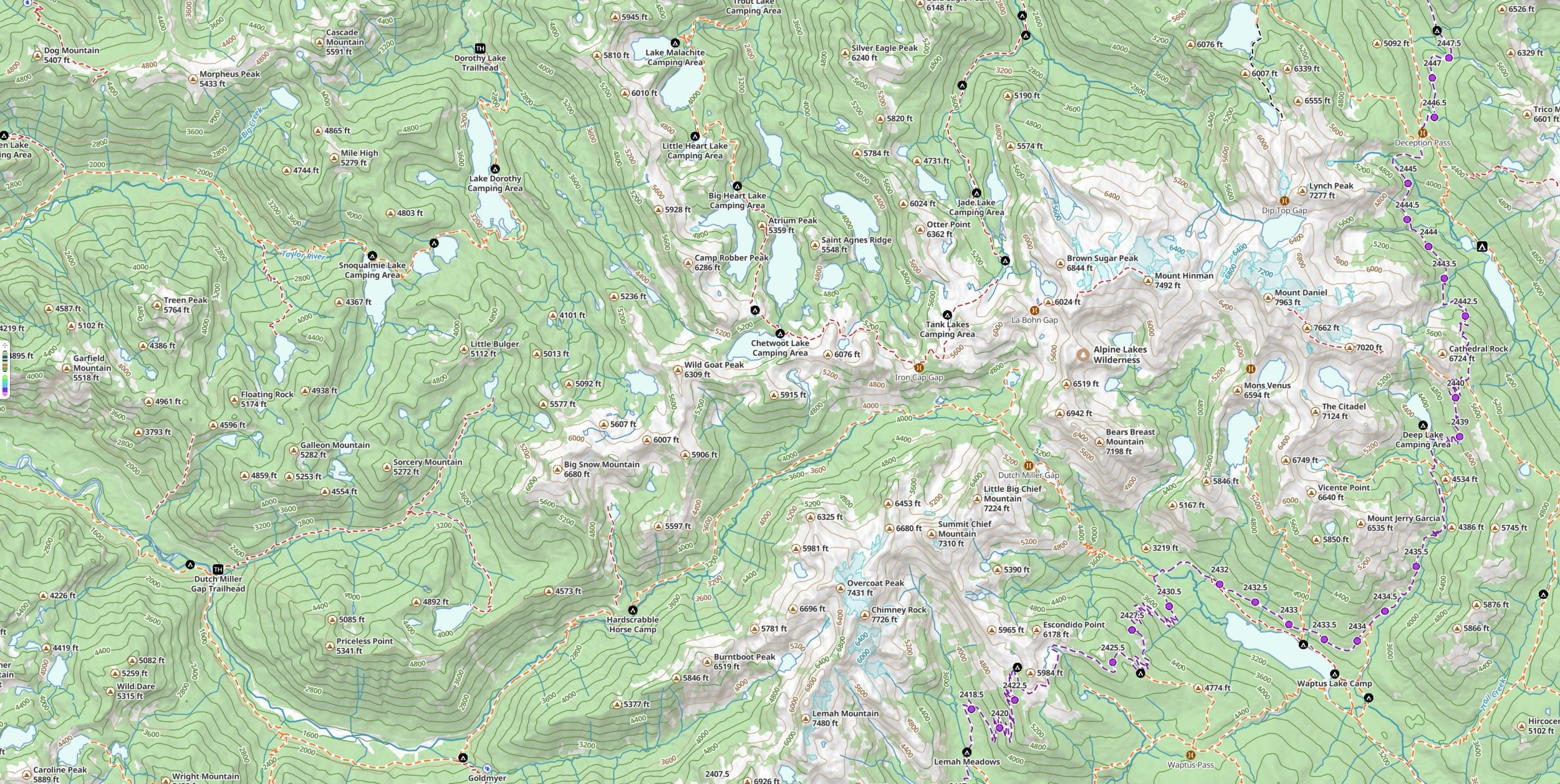
A small pack forces good decisions. Every item has to earn its place, and the biggest wins come from planning, not gear: knowing where the water is, how much food you really eat, and how cold it’ll get.
Plan it
Pack less by planning more.
Find the water, count the days, and know how cold it’ll get before you leave.